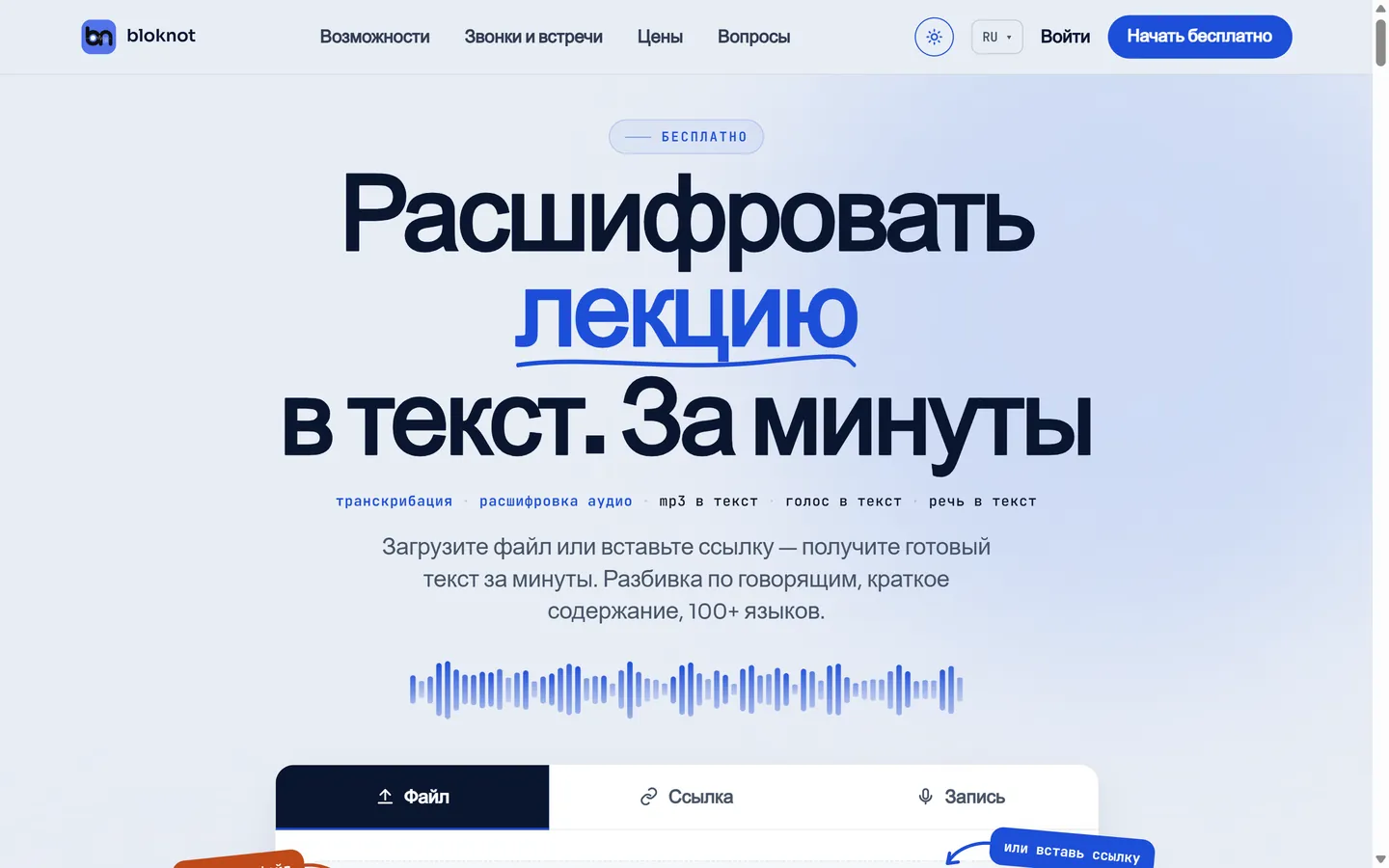
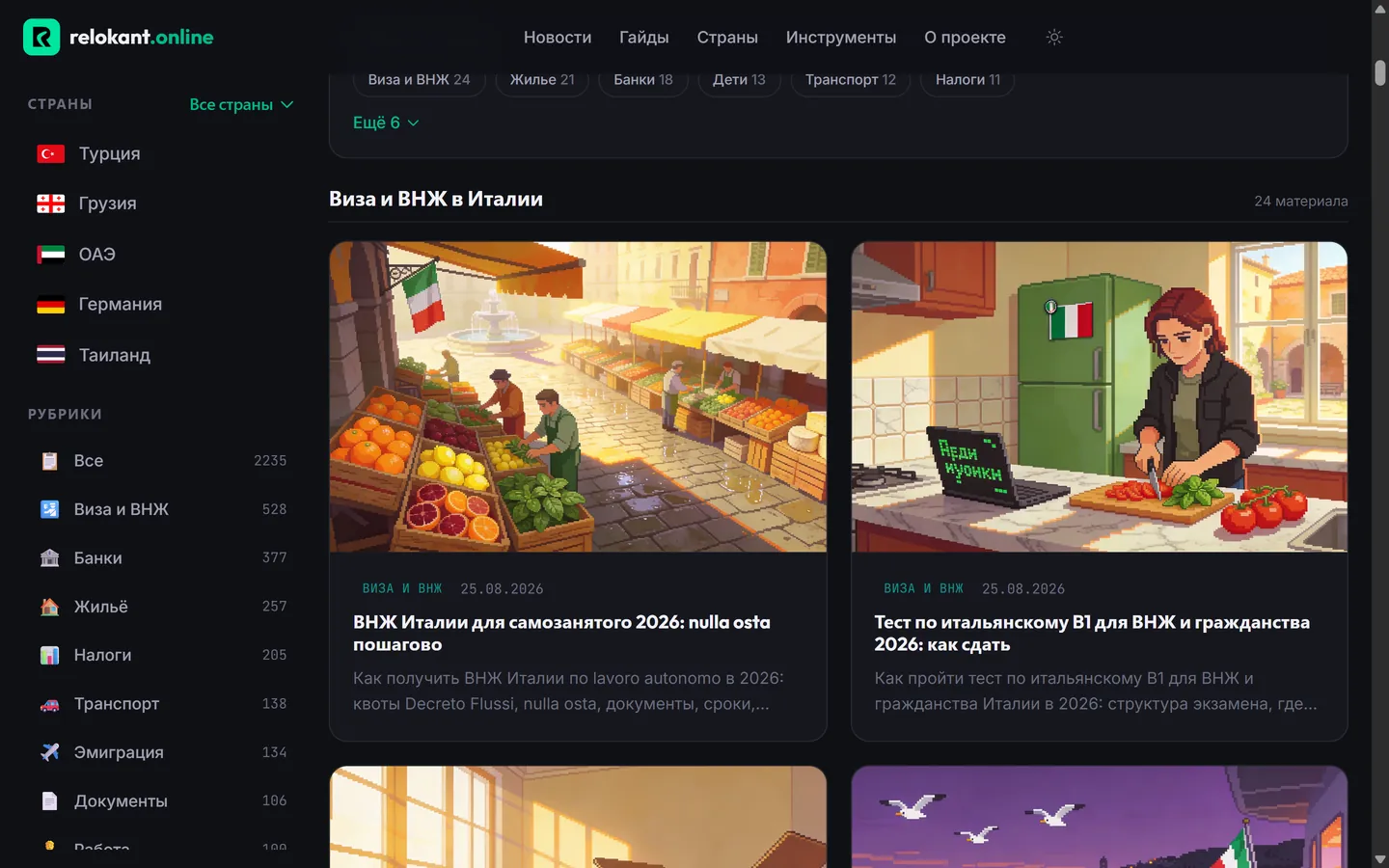
The task
The client needed a working service, not a page about one. A user uploads a file or pastes a link, the job goes through a queue, and a finished transcript with a summary lands in their account. Behind that sit a processing backend, a dashboard and paid plans under one login.
The second half of the task was where the users come from. The product sells to an international audience, so the site was built for search from the start: feature pages, tool pages, use-case pages and a blog, planned around what people actually type.
What we built
Software development for a transcription service
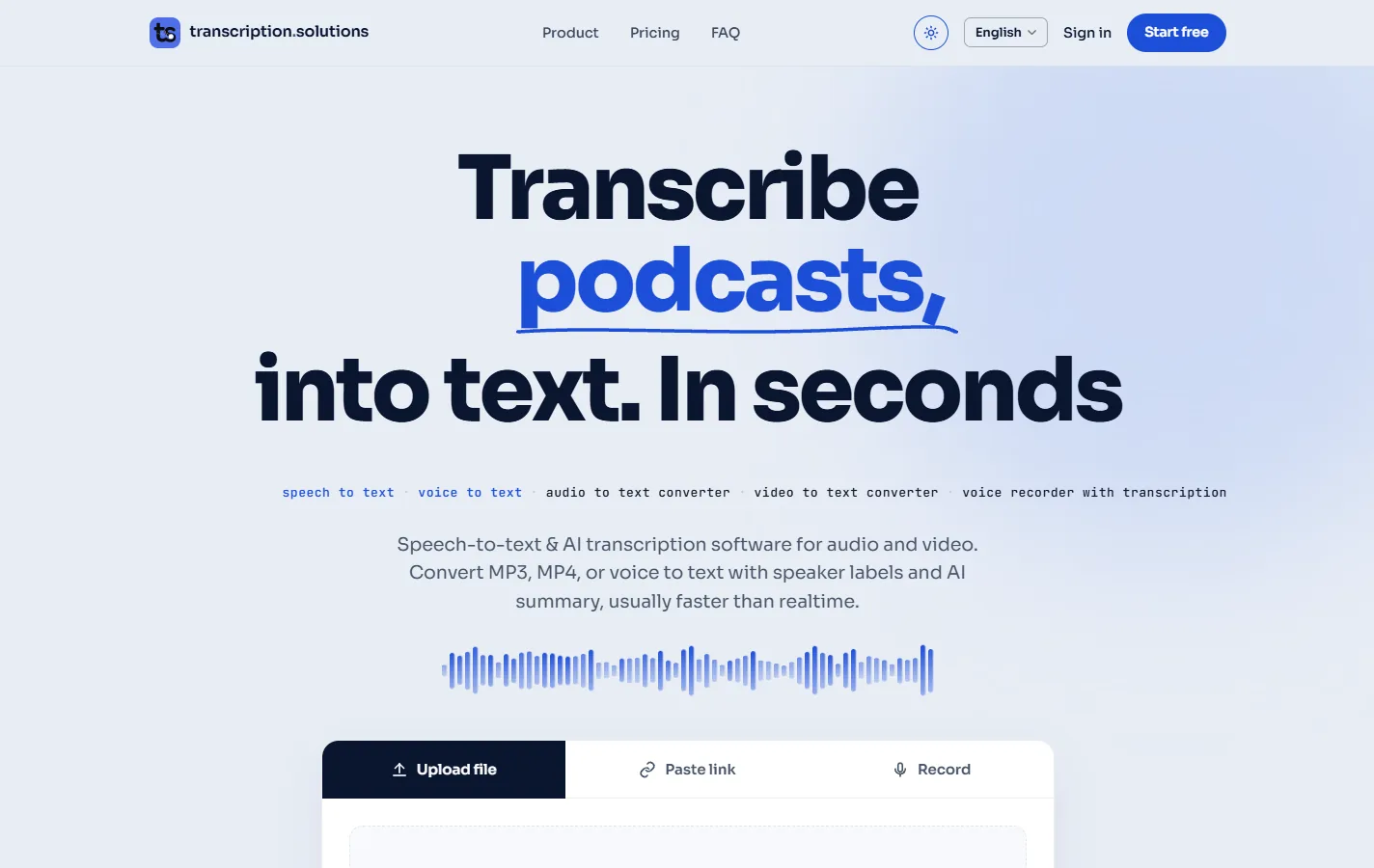
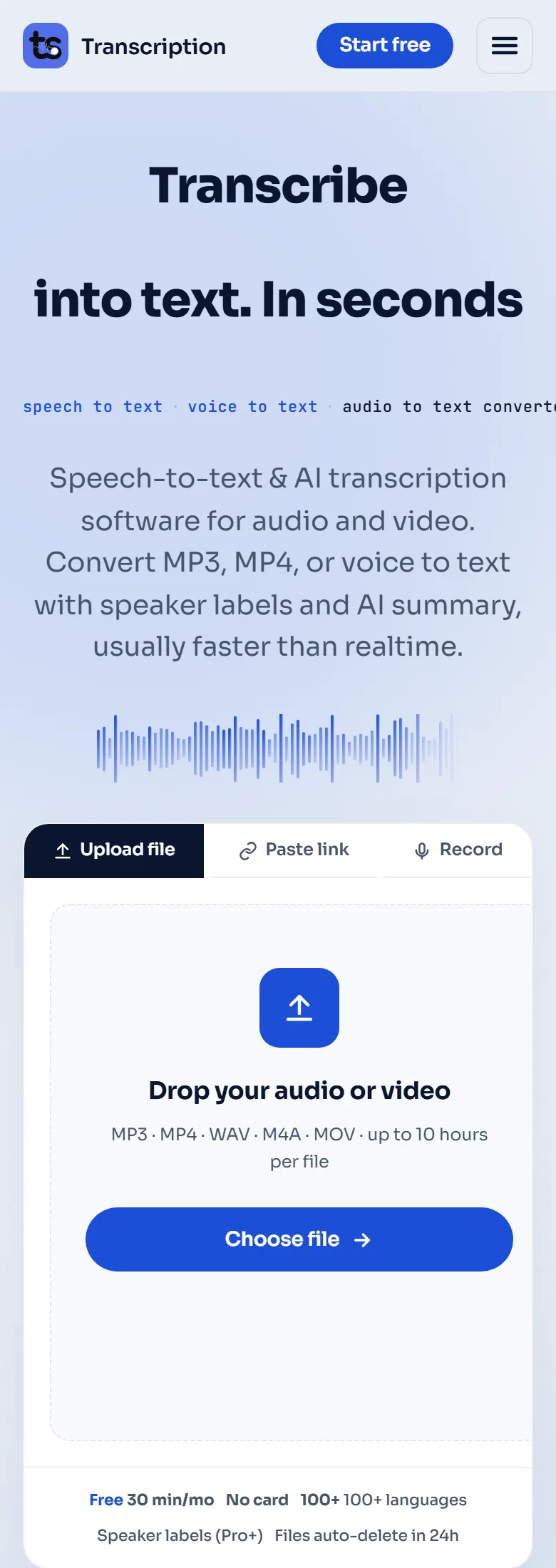
The front door takes three inputs: upload a file, paste a link, or record in the browser. Accepted formats and limits are written next to the box, so nobody uploads a file the service will refuse.
Behind the box is the pipeline: the file joins a queue, gets transcribed, gets split by speaker and comes back with a summary. Job status updates live, so a user watches the progress instead of reloading the page.
The dashboard is shown on the page itself
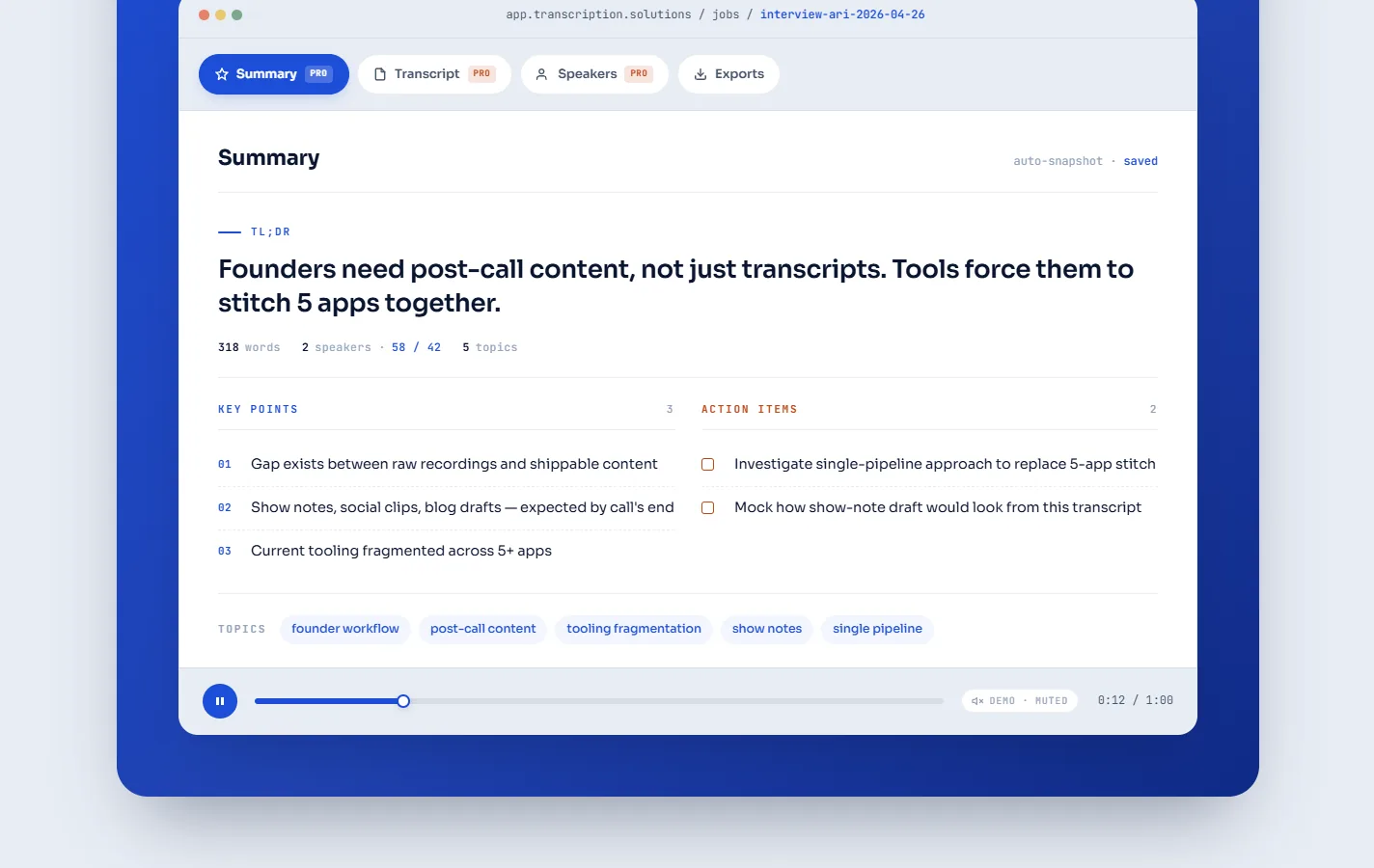
Instead of describing the account, the home page puts the real interface on it. Tabs switch, action items toggle, and the summary block shows key points, topics and word counts. It is the same layout a user gets after a job finishes.
It answers the question people ask before signing up: what do I actually get back. Under it, one file is shown with the eight things derived from it, from the timestamped transcript to the export formats.
Plans, limits and billing
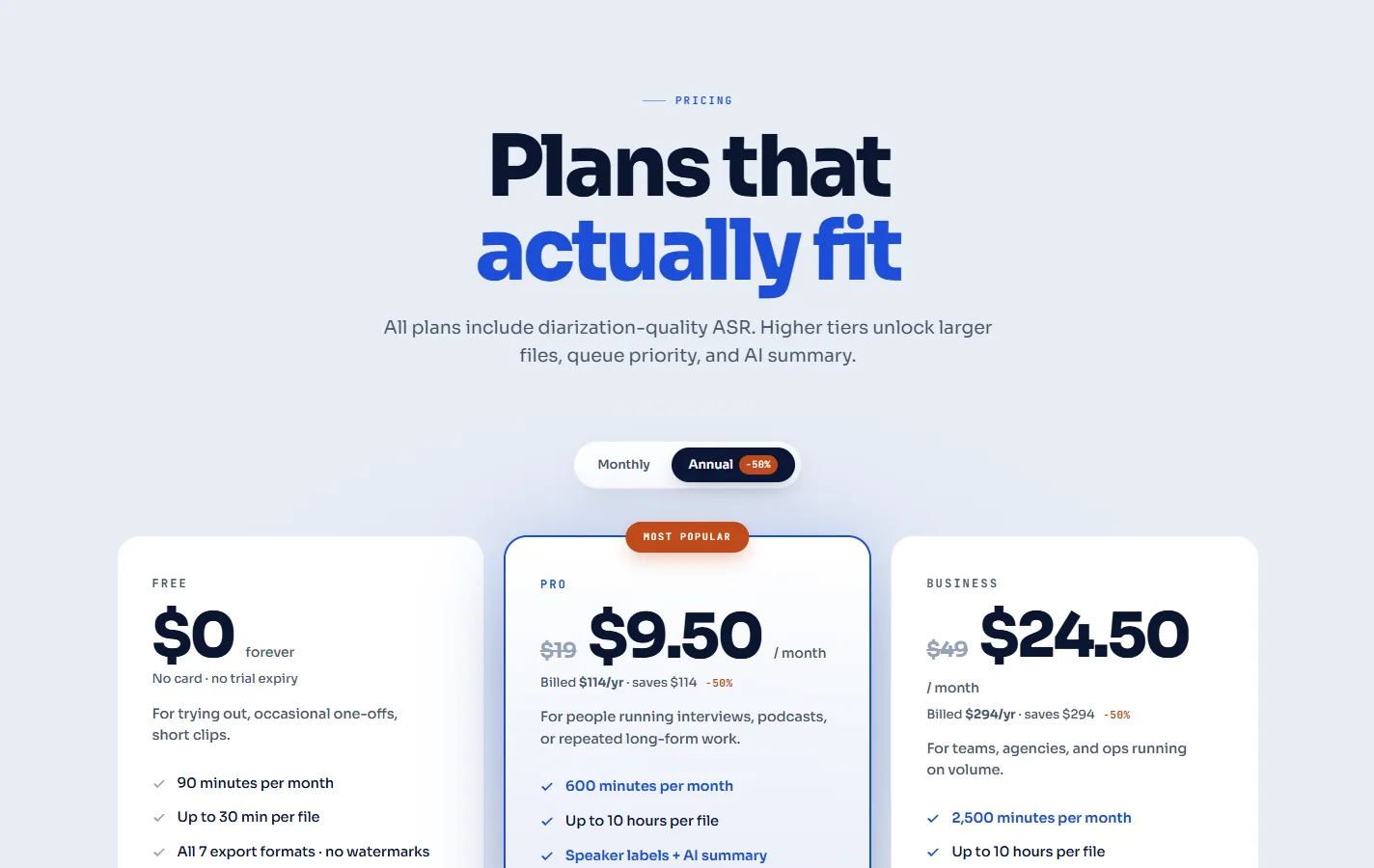
Three plans, monthly or annual, with the limits written on the card: minutes per month, maximum file length, which features unlock. The free plan needs no card, and that is where most people start.
Billing is part of the product rather than a page about it. The plan an account is on decides the file length, the monthly minutes and the queue priority.
Search marketing for a SaaS product
The site is built to be found. Feature pages, free tool pages, use-case pages and a blog each answer a separate query, and every one of them leads back to the same product.
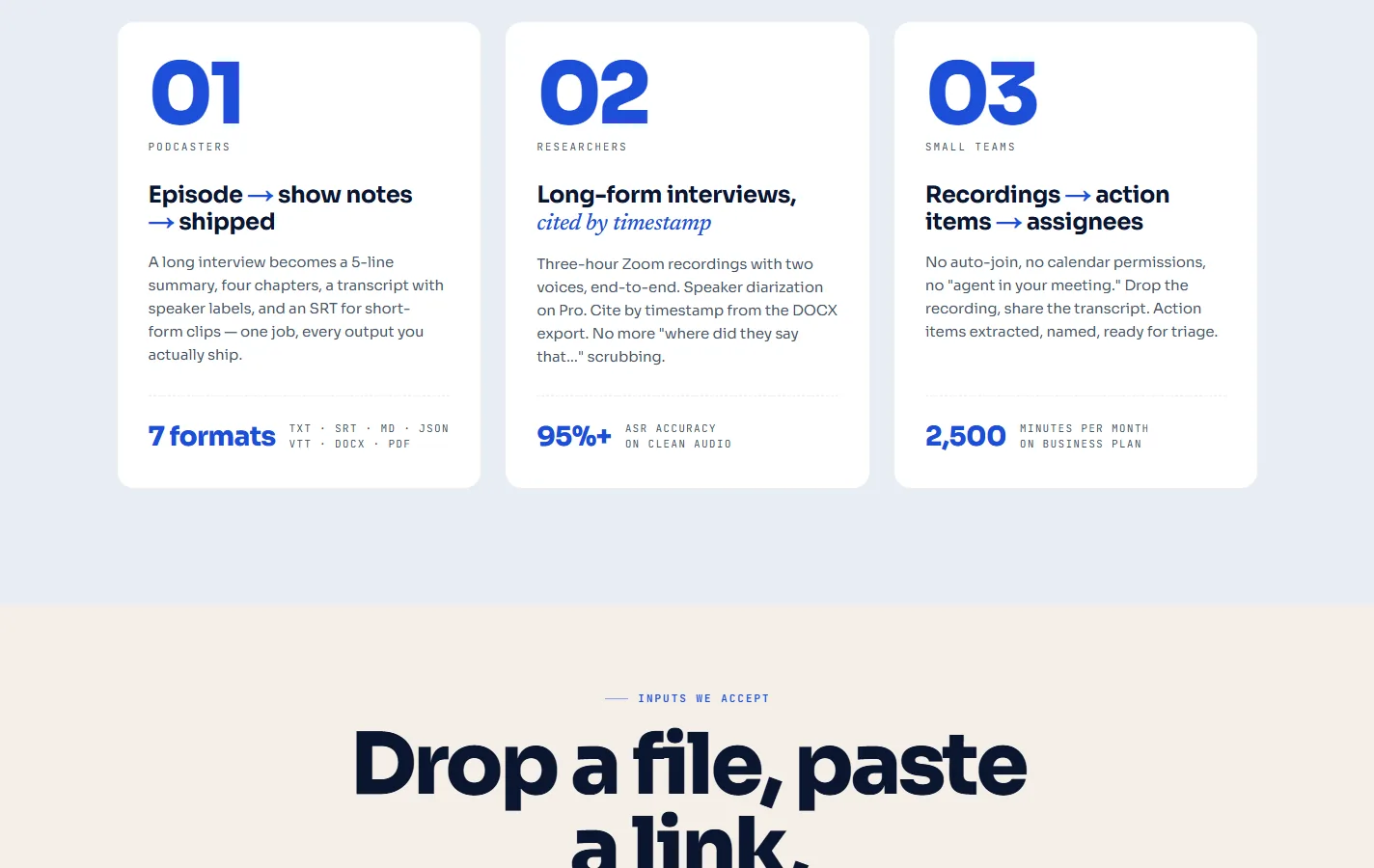
The home page names its audiences in their own words: podcasters, researchers, small teams. A visitor from search lands on a page about their own job.
Under the hood
Under the interface sit the recognition engines, the payment rail and the markup that gets the product found. Here is what was built inside and what anyone can check from outside.


Search and AI answers
Languages and hreflang tags
The public site is set up for 100 locales and the dashboard for 111, right-to-left languages included.
Structured data on the pages
The pages carry JSON-LD markup of the Organization, SoftwareApplication and FAQPage types.
A sitemap of 3,939 addresses
The sitemap is generated by the site itself and lists 3,939 addresses; robots.txt points to it. The sitemap
A file written for language models
The site publishes llms.txt and a full version of it: a description of the product written for language models rather than for people. llms.txt


Recognition
Recognition with a spare engine
Speech goes to AssemblyAI Universal-2, which separates the speakers itself.
Summaries through a model router
The summary and the action items are written by a language model reached through OpenRouter, with a second model set as a fallback.
A bot on Zoom, Meet and Teams
The bot joins a call on Zoom, Google Meet or Microsoft Teams through Recall.ai.


Export
Seven formats out of one job
A finished transcript leaves as TXT, SRT, VTT, DOCX, Markdown, JSON or PDF.

Money
Subscription and minute packs
Payments run on Stripe.


Law
Privacy, terms and refunds
Three legal pages are published and linked from the footer: the privacy policy, the terms and the refund rules. Privacy policy
On a phone
What came out of it
- Live on the international market, traffic comes from organic search
- Six ways into the service, including a public REST API
- The dashboard is open on the home page, before signing up
The product and its marketing run as one system. Search brings people in, the free plan lets them try the service on their own file, and the paid plans carry the ones who come back. Development and search work are done by the same hands, so a new page does not wait for a hand-off.